


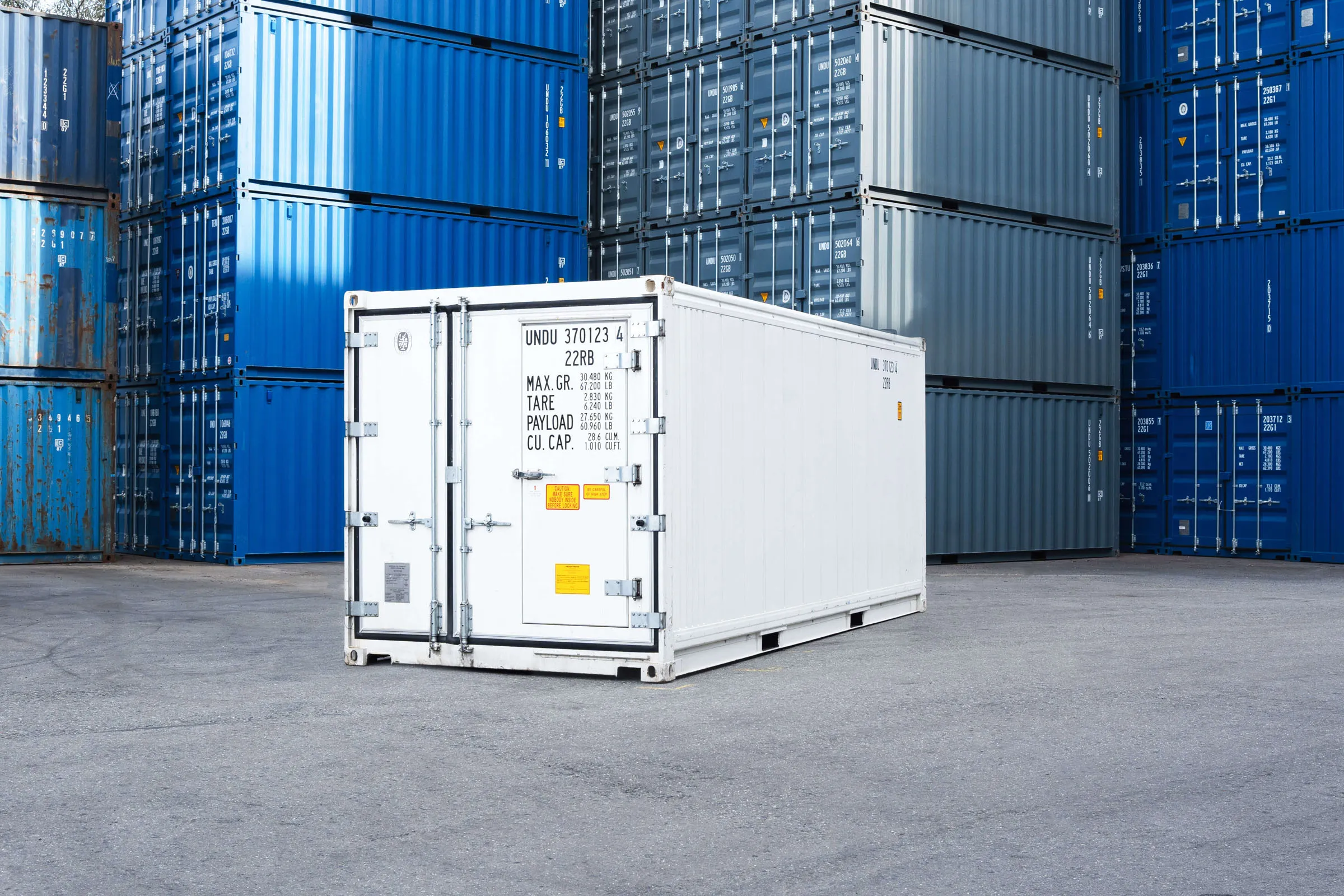
Buy refrigerated containers and find customized solutions
Are you looking for a refrigerated container that’s perfectly suited to your needs? We offer a wide selection of modern refrigerated containers that you can buy, rent, or have customized.
With over 30 years of experience, we’ll help you find the right solution—from selection and equipment to delivery and transport. Everything from a single source, delivered efficiently and reliably.
Find the refrigerated container that’s right for your project today!

When is it worth buying new refrigerated containers?
New containers are the right choice if you’re planning for the long term and value top performance and the latest technology. They come ready to use with no lead time and can be perfectly tailored to your needs.
The benefits of buying new refrigerated containers:
- State-of-the-art cooling technology and maximum energy efficiency
- Custom configurations and modifications are possible right from the start
- No signs of wear or prior damage
- Particularly suitable for long-term or sensitive applications (e.g., pharmaceuticals, food)
When is it worth buying a used refrigerated container?
Used containers offer you a cost-effective alternative if you want to stay flexible or save money—without compromising on functionality.
The benefits of buying used refrigerated containers:
- Significantly lower acquisition costs
- Available quickly and ready for use at short notice
- Ideal for temporary projects or changing locations
To ensure you know exactly what you’re getting, there are two key factors to consider when purchasing used refrigerated containers: the physical condition of the container and the technical condition of the refrigeration system. The following classifications primarily describe the general condition of the container:
- IICL: The highest quality standard for used containers, in excellent technical and visual condition
- Cargo Worthy (CW): Fully functional and suitable for safe transport
- Wind and Watertight (WWT): Weatherproof and watertight – ideal for storage
For a refrigerated container to be ready for operation, the condition of the refrigeration unit is also crucial. It is important that the system is inspected and ready for use—for example, through a PTI (Pre-Trip Inspection), which is a technical functional test of the refrigeration system.
This ensures that you not only get a leak-proof container, but also a solution that operates reliably at the desired temperature.


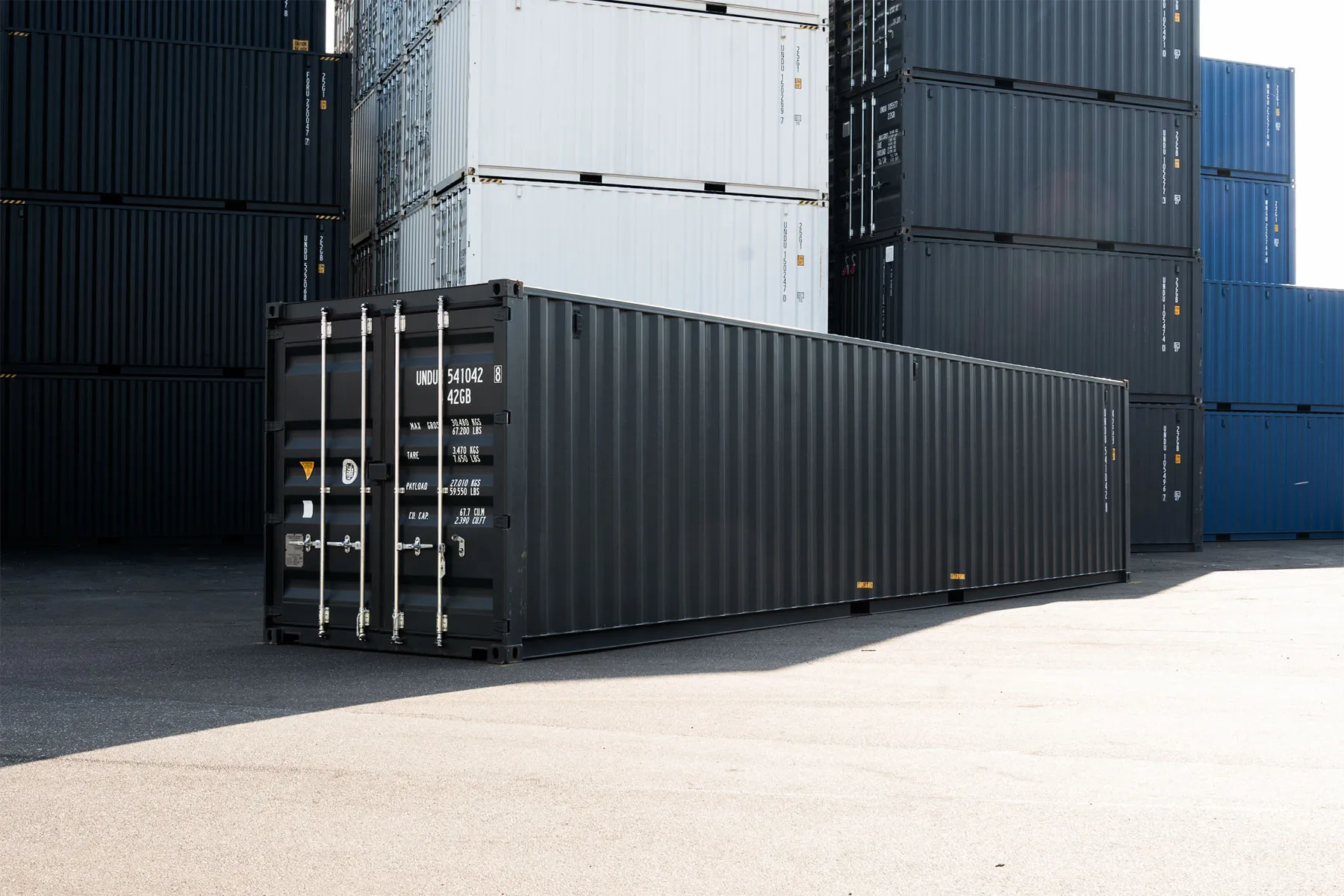
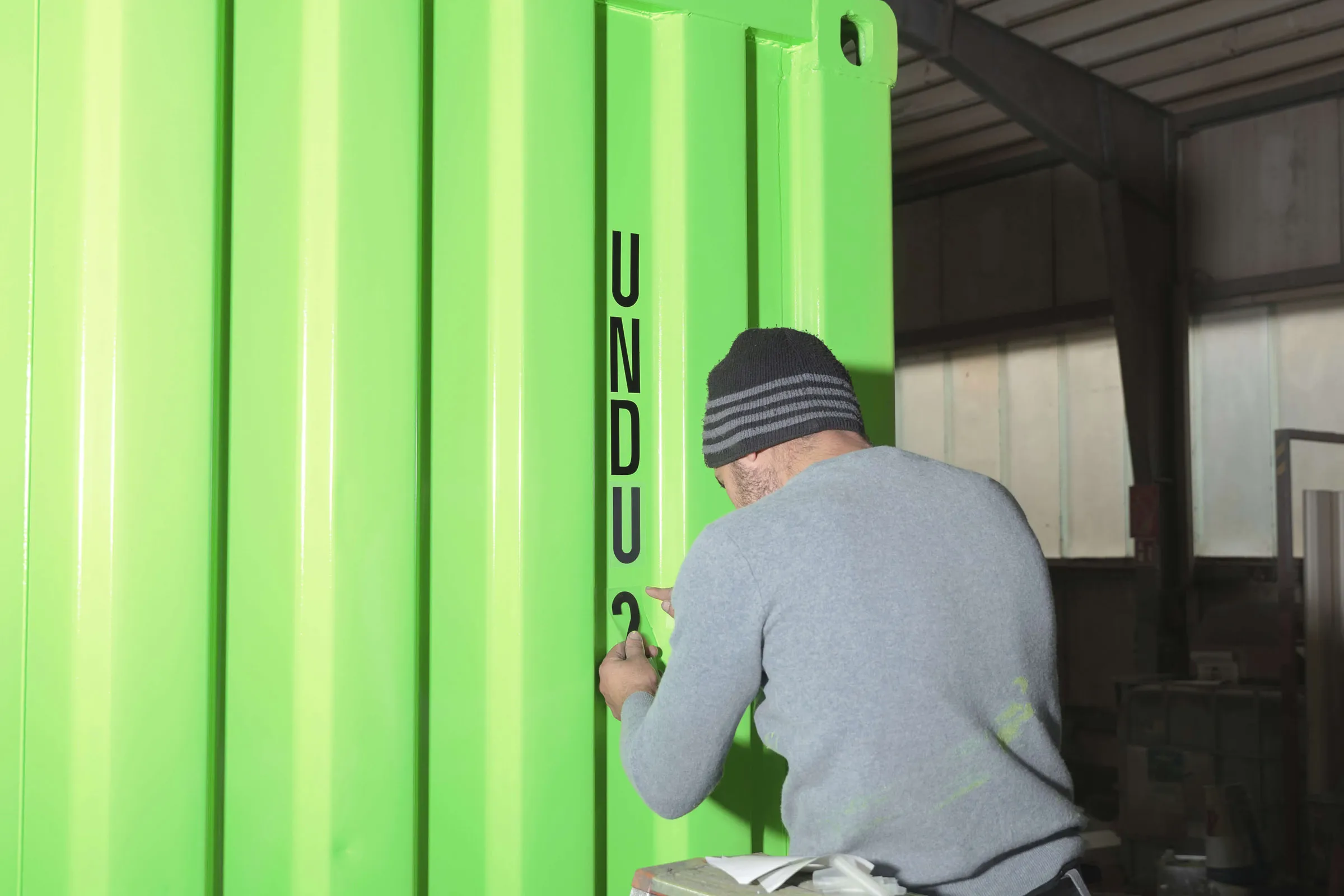
Impressions



Frequently Asked Questions About Purchasing Refrigerated Containers
If you’re looking to buy a refrigerated container, it’s important to keep the specific intended use in mind. Key factors include the required temperature range, size, type of goods being stored, and duration of use. The location also plays an important role, particularly in terms of power supply and available space.
In addition, it’s worth paying attention to features and possible customizations. Features such as lighting, ramps, or special access solutions can significantly simplify daily operations. With an experienced partner by your side, you can ensure that all requirements are addressed early on and that you receive a solution that meets your needs in the long term.
The right size depends primarily on how much cargo you want to store or refrigerate and how much space you have available at the site. Refrigerated containers are available in various sizes—typically ranging from 10 feet to 45 feet—and offer correspondingly different capacities.
In addition to volume, you should also consider your operations: Is the container frequently loaded and unloaded? Do you work with pallets or bulky goods? In such cases, additional space or a special design may be beneficial. If you’re unsure, we’ll help you determine the optimal size for your specific application—efficiently and tailored to your needs.
Buying is especially worthwhile if you plan to use the refrigerated container long-term or on a regular basis. You’re not dependent on availability, can customize the container, and tailor it precisely to your processes. Especially for fixed locations or long-term projects, buying is often the more cost-effective solution.
Renting, on the other hand, is a good option if you have short-term or seasonal needs, such as for events or temporary projects. This allows you to remain flexible and avoid high initial investments. Which option is better for you depends largely on your planning and usage—we’d be happy to advise you individually.
These classifications help you better assess the condition of used refrigerated containers. They provide information on how well the container is maintained and what it is suitable for.
• IICL stands for a particularly high standard of quality. These containers are in very good technical and visual condition and are nearly comparable to new models.
• Cargo Worthy (CW) means that the container is fully functional and suitable for safe transport.
• Wind and Watertight (WWT) describes containers that are airtight and weatherproof—ideal for storage purposes where transport is not the primary focus.
This allows you to select the appropriate quality level based on your specific application.
To ensure that your refrigerated container operates smoothly, the installation site should meet a few basic requirements. Above all, it is important to have a stable, level surface that can support the weight of the container over the long term. You should also allow for sufficient space for delivery, installation, and use.
Another key consideration is the power supply, as refrigerated containers are electrically powered. Depending on the model, different connections may be required. Additionally, it is recommended to choose a location that ensures easy access for loading and unloading. We’d be happy to help you assess the conditions in advance and prepare everything optimally.
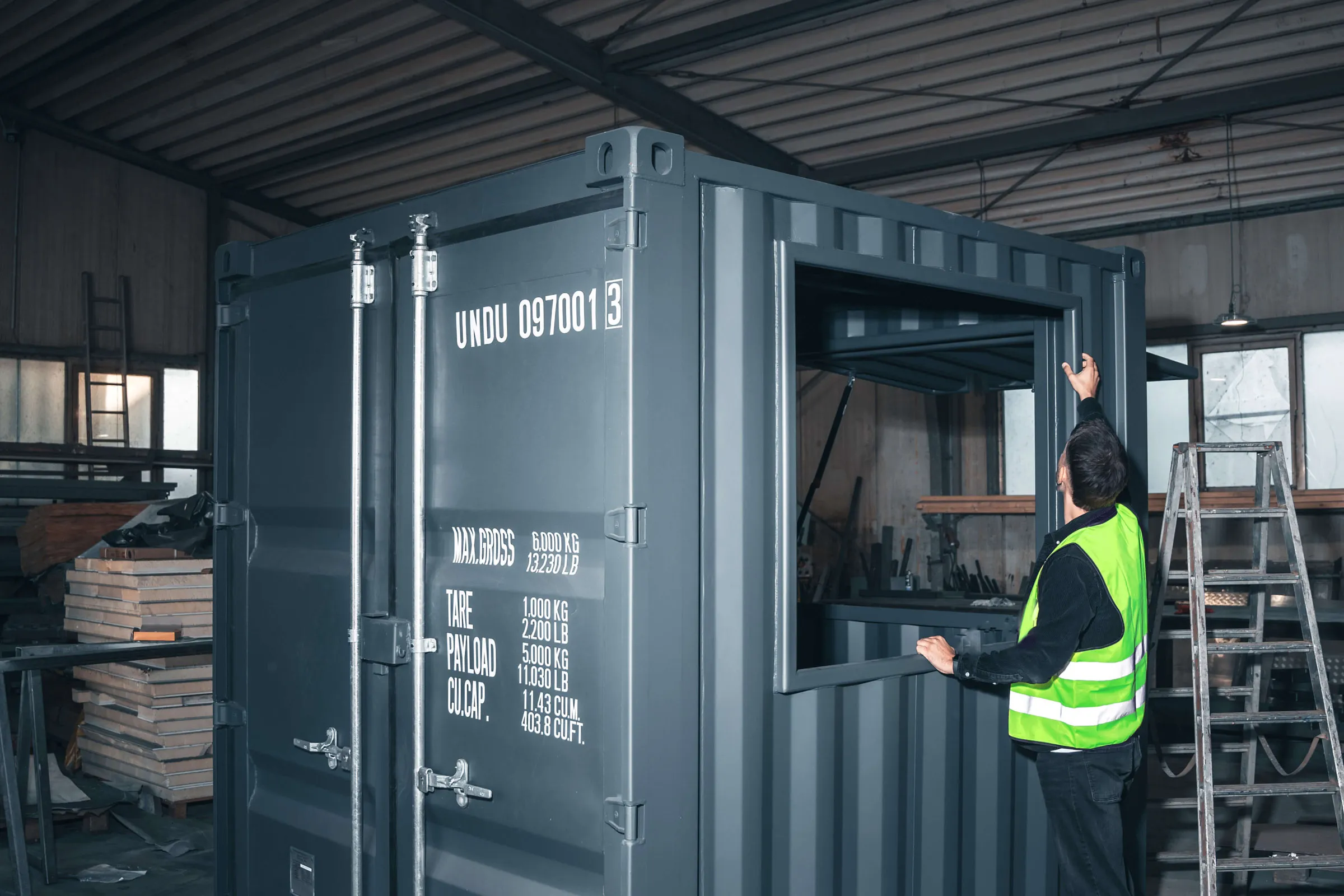
Yes, at Unitainer, you can have your refrigerated container customized to meet your exact requirements. In addition to standardized models, we offer numerous customization options to ensure the container integrates seamlessly into your operations.
These include features such as lighting, ramps, shelving systems, and special access solutions. Safety-related features and industry-specific adaptations are also possible. Together with you, we develop a solution that not only meets technical requirements but also performs well in daily use—efficient, well-designed, and precisely tailored to your needs.
In everyday language, the terms are often used interchangeably. Technically speaking, these are typically reefer containers, which are used to transport refrigerated or frozen goods depending on the set temperature range. Whether it’s food, pharmaceutical products, or temperature-sensitive materials, the key factors are the required temperature, the duration of transport, and the appropriate equipment in the container.